Cell Survivor
- 4.0
- Rating
- 5.00M
- Installs
- Free
- Price

 Analysis by App-foxy
I went into Cell Survivor expecting a small, quick role-playing game built around its unusual medical theme, and that is exactly where it makes the strongest impression. Instead of sending me through a familiar fantasy world, it puts the action inside a microscopic battle: I use pills to fight a virus while trying to keep a pigeon alive in the middle of the chaos. The idea is strange enough to be memorable, but the real question is whether that novelty gives the game enough depth to hold attention after the first few sessions.
My short answer is that it is worth trying if you enjoy compact survival-style role-playing games and do not need a large story or a complicated world. The free entry point makes the decision easy, while the odd combination of cells, medicine and pigeon-focused humor gives it a personality that many more conventional mobile RPGs lack. At the same time, players looking for deep character development, a carefully written campaign or a calm, predictable progression loop may find it too lightweight.
What to consider before downloading
Cell Survivor comes from Snap Brain Games and is listed as a free game for players aged Everyone 10+. It belongs to the role-playing category, although I would approach it more as a fast, self-contained survival experience than as a traditional dialogue-heavy RPG. That distinction matters: the appeal is in reacting to threats, using the available tools and trying to last longer, not in building a large party or exploring a detailed fantasy map.
You May Also Like

 Blood Strike: 2.5 Anniversary
Blood Strike’s Loadouts Turn Every Drop Into a Tactical Gamble
A close look at Blood Strike’s custom loadouts: how fast access to signature weapons reshapes its battle royale rhythm, rewards preparation, and narrows the gap between fights.

 Pandora - Music & Podcasts
Pandora’s Music Is Easy to Start, but Harder to Recover
Pandora’s strength is its low-effort path from a seed to a station. Its weak spot is how much confidence it asks you to place in connection, setup, and quiet recovery.

 8 Ball Pool
 Is Built on Rivalries, Rematches, and Routine
A close look at the rivalries, rematches, shared routines, and unanswered safety questions that turn a quick pool match into a persistent mobile community.

 Samsung Music
’s Quiet Strength Is Playing What You Already Own
Its reach comes less from spectacle than from dependable access to a personal library. That simplicity is both the app’s strongest retention engine and its ceiling.

 AccuWeather: Weather Radar
AccuWeather Review: A Quick, Clear Forecast for Everyday Decisions
For everyday plans, the best forecast is the one you can understand quickly. AccuWeather makes rain timing, radar, and local conditions easy to act on, with a few trade-offs.

 Hill Climb Racing
Why Hill Climb Racing Still Turns Crashes Into One More Run
A tiny car, a bumpy hill and one more upgrade: Hill Climb Racing keeps resurfacing because its simple chaos makes every near-miss feel personal.
More From Our News Desk
View All News


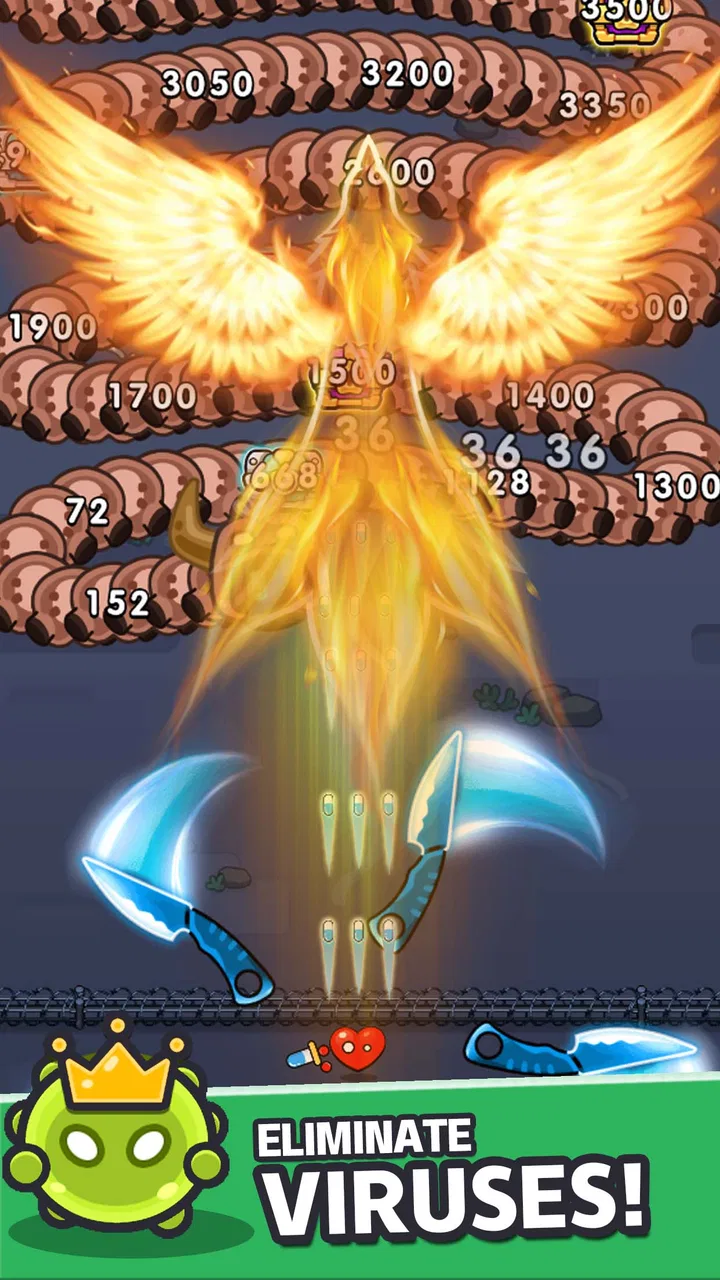
The store summary describes the central idea simply: pills are used to kill the virus, with the pigeon experience providing the game’s unusual identity. In practice, I found that this premise works best when I treat each session as a focused challenge rather than expecting a long-form adventure. The theme gives the battles a playful visual hook, but the moment-to-moment enjoyment still depends on whether I like quick decisions and repeated attempts.
The game has a 4.2 average from around 102 thousand ratings, with more than a thousand published reviews and over a million installs. Those figures suggest that it has reached a substantial mobile audience, but they should not be read as proof that it suits every RPG player. A popular casual game can still be the wrong choice for someone who wants a slower pace or a more traditional role-playing structure.
One practical point is compatibility. The current version is 2.01 and it supports Android 6.0 or later, so it is aimed at a broad range of devices rather than only recent phones. I would still leave some storage and battery room for any game session, especially if I planned to play for a long stretch, but the stated operating-system requirement makes it accessible to people using older Android hardware.
The game is free to install, with optional purchases ranging from $0.49 to $99.99 per item. That wide range is the first reason I would recommend deciding on a personal spending limit before playing. A free download is useful for testing the core loop, but the presence of optional purchases means the long-term experience should be judged not only by the opening sessions, but also by how comfortable you are progressing without buying anything.
How I would judge the first session
My first test would not be whether the premise made me laugh. It would be whether the controls and battle rhythm feel understandable within a few minutes. A game like this needs to communicate three things quickly: what threatens the cell, what the pills actually accomplish and what I should prioritize when several problems appear at once. If those decisions feel clear, the unusual theme becomes an advantage instead of a distraction.
I would also pay attention to how much progress carries from one attempt to the next. Survival-oriented role-playing games can be satisfying when each failed run teaches me something, even if I do not win. They become frustrating when a loss feels random or when the only meaningful improvement comes from repeating the same action. For Cell Survivor, the best sign is a feeling that I am learning how to use the tools more intelligently, not merely waiting for a stronger upgrade.
A useful way to test it is to play in short blocks rather than immediately committing to a long session. I would try one run during a break, another later in the day and a third after deliberately changing my approach. If the game remains interesting when I make different choices, it has more staying power than its simple premise might suggest. If every attempt feels identical, the novelty may wear off quickly.
Where the strange premise becomes a real advantage
The most obvious strength is that the setting does not blur into the usual mobile RPG background. I have played plenty of games built around warriors, monsters, kingdoms and magic, so a cell-survival scenario immediately feels different. The pigeon element adds another layer of absurdity without requiring the game to pretend it is an epic fantasy. That makes it easier to recommend to someone who wants something unusual for a few minutes rather than another serious adventure.
The theme also gives the basic objective a clear identity. Fighting a virus with pills is easier to remember than another generic instruction to defeat enemies and collect loot. Even if the underlying structure is familiar, the visual and conceptual framing can make repeated encounters feel more personal. I found that useful when deciding whether to start another attempt: I was returning not only for progress, but also because the setting had its own personality.
Another advantage is the likely fit for short mobile sessions. I would choose this game when I have a limited amount of time and want direct interaction instead of a long cutscene or a large quest chain. It suits a bus ride, a waiting room or a short evening break, provided I am comfortable with the possibility that a run may end before I feel completely finished. That stop-and-start quality is often more important on a phone than a large feature list.
The best reason to try it is the combination of a low-risk download and a setting you will recognize immediately. I do not need to understand a large cast of characters before I can appreciate the premise. That makes the game especially approachable for casual players who usually avoid role-playing games because they seem demanding or time-consuming.
Small decisions that improve the experience
My first practical tip is to avoid treating every encounter as a race to attack. In a virus-themed survival game, it is tempting to focus only on removing the most visible threat. I would instead watch the whole play area and decide whether the immediate danger is the enemy closest to the pigeon, the threat that is multiplying pressure or the obstacle that limits my next move. That habit turns the game from simple tapping into a more deliberate prioritization exercise.
Second, I would not spend optional currency during the first few attempts just because a purchase appears convenient. Early sessions are the best time to learn whether the basic loop is enjoyable. Spending before understanding the game can make it harder to tell whether I genuinely like the design or merely like the faster progress. Since purchases can be inexpensive at the low end but reach a much higher upper limit, setting a budget in advance is sensible.
Third, I would use failed runs as experiments. Instead of repeating the same pattern, I would change one decision at a time: focus on a different threat, save a pill for a more dangerous moment or take a more conservative route when the screen becomes crowded. This is a simple way to discover whether the game rewards planning. It also prevents a common mobile-game problem in which repetition becomes automatic rather than engaging.
A fourth tip is to judge the game by its replay value rather than by the first novelty burst. The pigeon and microscopic setting can carry the opening, but a good survival RPG needs to make another attempt feel purposeful. If I can identify a specific goal for the next run, such as improving timing or reaching a difficult point without spending, I am more likely to keep playing. If I cannot name what I am trying to improve, I would probably move on.
Who will enjoy it most
Cell Survivor is a good match for players who like unusual premises, quick role-playing sessions and survival pressure without needing a huge narrative. It should also appeal to people who enjoy discovering whether a simple idea has more tactical value than it first appears to. The game’s free price makes it easy to recommend as an experiment, especially to someone who wants a light Android game rather than a major long-term commitment.
I would also suggest it to players who enjoy sharing odd discoveries with friends. The concept is easy to explain, and that matters. Saying that you are fighting a virus with pills while protecting a pigeon is more memorable than describing another generic dungeon crawler. Even if the person you recommend it to does not become a regular player, they will understand the appeal before downloading it.
It is less suitable for someone who wants a deep role-playing identity. If your ideal game includes extensive character customization, a substantial story, complex party management or a large world to explore, this may feel too focused. The same applies if you dislike repeated survival attempts or prefer games where progress follows a clearly scripted campaign. In those cases, a conventional story RPG may provide a stronger sense of direction.
I would also hesitate to recommend it to players who are highly sensitive to in-app purchase pressure. The game can be tried for free, but the available purchase range is broad enough that spending decisions deserve attention. Anyone who prefers a completely fixed-price experience should compare it with a premium RPG before investing significant time here.
Where another type of game may fit better
Compared with a traditional role-playing game, Cell Survivor appears to put more weight on immediate survival decisions and less on a long journey. That is an advantage when I want something I can understand quickly, but a weakness when I want emotional investment in characters or a carefully unfolding plot. The choice is not simply between a better and worse game; it is between different kinds of attention.
Compared with a pure arcade game, its role-playing label suggests a little more structure and progression, but I would not choose it expecting the precision of a dedicated reflex title. The cell-and-virus theme gives the action context, while the RPG framing gives the sessions a sense of development. If I only want instant score chasing, an arcade alternative may be cleaner. If I want a more recognizable adventure, a conventional RPG may be more satisfying.
Compared with a large live-service game, this is the more approachable option for someone who does not want a long list of systems to learn. The trade-off is that a smaller, focused concept may offer less variety over months of play. I would choose Cell Survivor for a compact daily habit, not as my only mobile game if I need endless content or a broad social community.
The best alternative depends on what is bothering you. If the unusual theme is the attraction, few standard RPGs will replace that specific charm. If the theme is not enough and you need a rich story, the sensible switch is to a narrative role-playing game. If you want pure efficiency and instant rounds, an arcade survival game may be a better fit. Thinking in those terms is more useful than comparing feature lists that may not serve the same purpose.
The real cost of changing your mind
Because the game is free to install, the financial cost of trying it is low at the beginning. The more important cost is time: learning the rhythm, deciding whether the progression feels fair and resisting purchases until you know what kind of player you are in this system. I would give it several short sessions before making a final judgment, but I would not force myself to continue once the experiments stop revealing anything new.
If you decide to leave after spending money, the decision can feel more complicated because you may want to justify the purchase by playing longer. That is why I recommend setting a limit before buying anything. A small purchase should be treated as payment for enjoyment already received, not as a reason to keep playing a game that no longer fits. This mindset is particularly helpful when the available items extend from very low-cost options to much larger purchases.
Switching to another RPG also means giving up the specific humor and setting that make this game stand out. You may gain a deeper story or a more familiar progression system, but you will lose the novelty of managing a microscopic crisis around a pigeon. I would only switch when the core loop no longer feels rewarding, not simply because another game has a longer feature list.
There is also a practical compatibility question. Since it supports Android 6.0 and later, it can fit older Android devices that cannot run every modern game. That makes it a reasonable option for a secondary phone or a device used mainly for casual play. If your phone is older, I would still test performance during a busy session rather than assuming that the operating-system requirement guarantees a perfect experience.
My recommendation after weighing the trade-offs
I recommend Cell Survivor as a free trial for players who want an odd, approachable role-playing game with a survival focus. Its strongest qualities are its memorable setting, direct premise and suitability for short sessions. The game does not need a complicated explanation to make sense, and that is a genuine advantage when I want to start playing immediately.
I would keep expectations measured. This is not the title I would choose for a grand story, elaborate character role-playing or a guaranteed long-term progression journey. I would also be cautious with in-app purchases and decide in advance whether optional spending is acceptable. The free download gives you a fair chance to evaluate the core experience before making that choice.
For a realistic everyday scenario, I can see myself opening it while waiting for an appointment, completing a focused attempt and closing it without needing to remember a complicated quest. On a longer evening, I would play several runs while testing different priorities and seeing whether the virus encounters continue to demand attention. That flexibility is where the game earns its place on a phone.
My final verdict is simple: try it if the microscopic virus battle and pigeon-centered humor sound appealing, especially if you prefer short sessions over a big campaign. Skip it if you need deep storytelling, extensive customization or a purchase-free structure. Snap Brain Games has chosen a distinctive idea, and in my experience that idea is strong enough to justify a download, as long as you judge the game by the focused survival experience it offers rather than by what a larger RPG might provide.
FAQs for Cell Survivor
01What is the main objective of Cell Survivor?
Cell Survivor is a strategic survival game where players must navigate through complex levels filled with obstacles and enemies. The primary goal is to ensure that your character survives each level by managing resources, crafting tools, and combating threats. The game challenges players with dynamic environments that require quick thinking and strategy.
02Is Cell Survivor available for both Android and iOS devices?
Yes, Cell Survivor is available for download on both Android and iOS platforms. You can find the app on the Google Play Store for Android devices and the Apple App Store for iOS devices, ensuring accessibility for a wide range of users who want to enjoy the game on their preferred device.
03Does Cell Survivor require an internet connection to play?
Cell Survivor does not require a constant internet connection, making it perfect for offline play. However, certain features such as multiplayer modes, updates, or in-app purchases may need internet access. This flexibility allows players to enjoy the game anywhere without worrying about connectivity issues.
04Are there in-app purchases in Cell Survivor?
Yes, Cell Survivor offers in-app purchases that enhance the gaming experience. Players can buy additional resources, customizations, and special abilities to help progress through challenging levels. While these purchases can enhance gameplay, they are optional and not necessary to complete the game.
05What age group is Cell Survivor suitable for?
Cell Survivor is suitable for players aged 12 and above. The game features strategic elements and mild fantasy violence, which may not be appropriate for younger audiences. Parents are advised to check the content and decide if the game is suitable for their children. Parental controls can also be used to manage in-app purchases.
Pros
- Engaging gameplay with strategic depth.
- Visually appealing graphics and animations.
- Regular updates with new content.
- User-friendly interface and controls.
- Minimal ads for a smoother experience.
Cons
- Can be challenging for beginners.
- Requires constant internet connection.
- Limited offline features available.
- In-app purchases can be pricey.
- Occasional lag on older devices.

Cell Survivor
Gallery